Imagine opening a physical store where customers walk in, browse your products for a few minutes, and then leave without buying anything — every single day. Frustrating, right? Yet this is precisely what happens when an e-commerce website is poorly built. Slow loading pages, confusing navigation, limited payment options, and a checkout process that feels unsafe all push potential customers away, taking their money with them.
In 2026, online shopping has become the default purchasing behavior for hundreds of millions of people. From everyday household goods to high-end electronics, customers research, compare, and buy through digital channels with a comfort level that would have seemed remarkable just a decade ago.
For businesses of every size — from neighborhood boutiques to national distributors — having a well-designed, high-performing e-commerce website is no longer an optional upgrade. It is the primary battleground where customers are won or lost.
This article walks through every critical aspect of building a successful e-commerce website in 2026: from the foundational features that every online store must have, to the design decisions that drive conversions, the technical architecture that supports growth, and the ongoing strategies that keep customers returning.
Why E-Commerce Is the Fastest-Growing Sales Channel in 2026
Global e-commerce revenue has grown consistently year after year, and 2026 shows no signs of slowing. Consumers have shifted their trust firmly toward online channels, and businesses that fail to meet them there are not simply missing an opportunity — they are actively losing market share to competitors who have embraced the digital shift.
Several forces have accelerated this shift:
- Smartphone penetration has made shopping accessible from anywhere at any time
- Digital payment infrastructure has matured, making online transactions faster and safer
- Same-day and next-day delivery has removed the last major advantage physical stores held
- Consumers now expect to research and compare products online before any purchase decision
- Social commerce and influencer marketing drive direct traffic to online stores
- Subscription and loyalty models create recurring revenue streams unavailable to offline-only businesses
For businesses that have not yet launched an e-commerce website — or for those running on outdated platforms — 2026 represents the most urgent moment to act. The cost of inaction is no longer theoretical; it shows up directly in declining sales figures.
Essential Features Every E-Commerce Website Needs in 2026
1. Fast, Mobile-First Design
More than seventy percent of e-commerce traffic now comes from mobile devices. A website designed with desktop screens as the primary target will perform poorly for the vast majority of its visitors. Mobile-first e-commerce design prioritizes smaller screens from the earliest stage of development, ensuring that product images, navigation menus, and checkout flows work flawlessly on smartphones.
Page loading speed is equally critical. Research consistently shows that even a one-second delay in page load time reduces conversions by several percentage points. In a competitive market where customers have dozens of alternatives a single tap away, speed is not a technical detail — it is a direct revenue factor.
2. Intuitive Product Catalog and Search
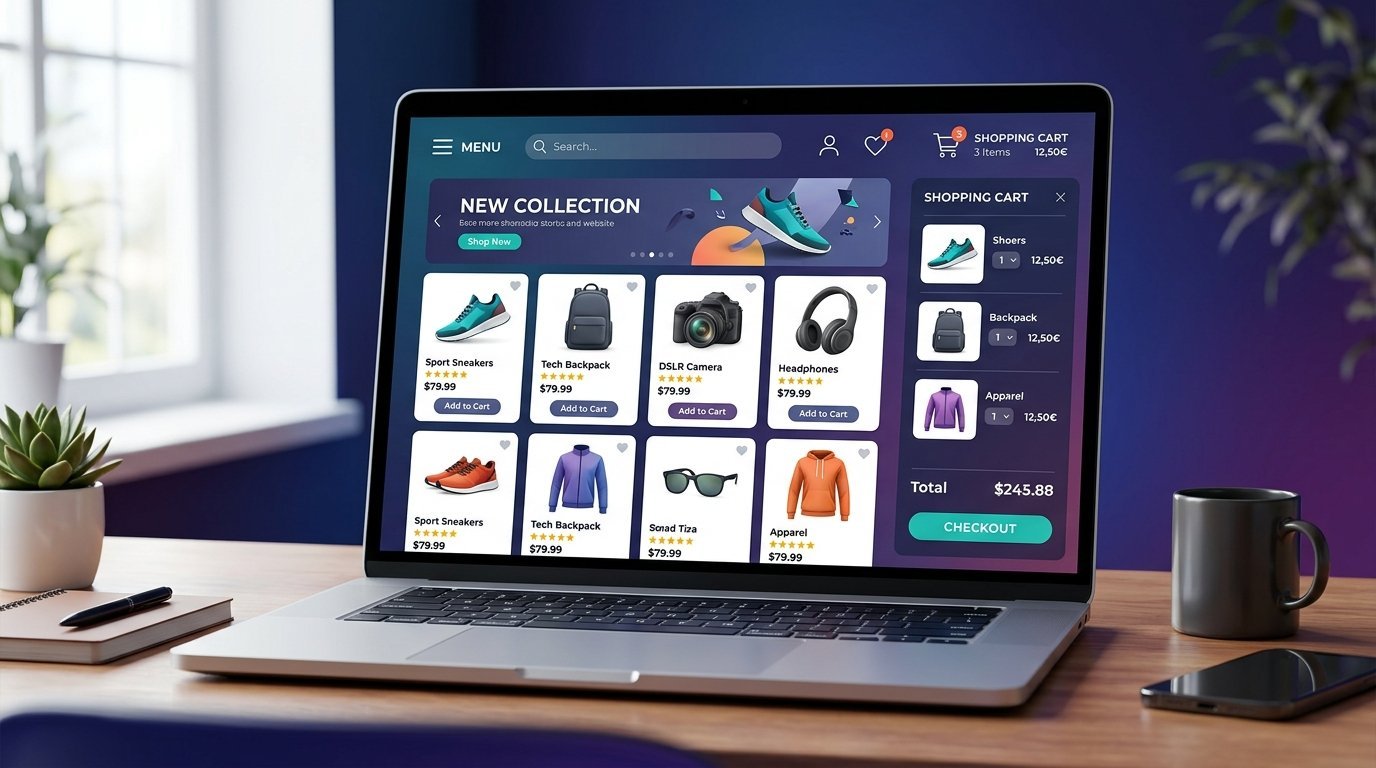
Customers who cannot find what they are looking for within a few seconds will leave. An effective product catalog includes clear category organization, high-quality product photography, detailed product descriptions, size or variant selectors, and a search function that returns accurate, relevant results.
Advanced search functionality in 2026 includes filters by price range, color, material, brand, and customer ratings. Auto-complete suggestions and typo tolerance ensure that users find what they need even when their search query is imperfect.
3. Secure and Frictionless Checkout
Cart abandonment is one of the biggest revenue leaks in e-commerce. The checkout process is where many businesses lose customers they had almost converted. An optimized checkout experience in 2026 is characterized by:
- Guest checkout option that does not force account creation
- Minimal form fields that request only essential information
- Progress indicators showing how many steps remain
- Multiple payment options including cards, UPI, net banking, and wallets
- Autofill support for address and payment details
- SSL encryption and trust badges visible throughout the process
- Clear order summary and total cost before final confirmation
Reducing the number of steps between adding a product to cart and completing payment is one of the single most effective ways to increase e-commerce revenue.
4. Multiple Payment Gateway Integration
Customers have strong preferences when it comes to payment methods. Offering only one or two options creates unnecessary friction and drives customers away at the final moment of conversion. A well-built e-commerce website in 2026 supports a comprehensive range of payment methods appropriate for the target market.
For businesses in India, this typically includes debit and credit cards across major networks, UPI apps, net banking from major banks, popular digital wallets, and buy-now-pay-later options for higher-value purchases. International businesses additionally integrate solutions like PayPal and Stripe.
5. Inventory and Order Management
Behind every successful e-commerce storefront is a reliable inventory management system. Customers expect accurate stock information, timely order confirmations, and real-time shipping updates. Running out of stock on a popular product without warning, or accidentally selling items that are no longer available, damages customer trust significantly.
Effective order management includes automated low-stock alerts, order status tracking pages accessible to customers, integration with shipping carriers for real-time updates, and return and refund workflow management.
Design Principles That Drive E-Commerce Conversions
Visual Trust Signals
Online shoppers cannot physically examine products before purchasing. They rely on visual cues to assess the trustworthiness of a store. Effective trust signals include professional photography, customer reviews with verified purchase badges, recognizable payment security logos, clearly visible return policies, and a physical business address or contact number.
First-time visitors to an e-commerce site make a rapid judgment about whether they trust it enough to enter their payment details. Every design element either reinforces or undermines that trust.
Strategic Product Presentation
How products are displayed affects buying decisions as much as the products themselves. High-resolution images from multiple angles, zoom functionality, lifestyle photography showing products in real use, and short video demonstrations all significantly increase purchase likelihood.
Product descriptions that go beyond listing specifications — explaining benefits, addressing common questions, and helping customers understand what makes a product right for their specific situation — convert browsers into buyers more effectively.
Personalization and Recommendations
Modern e-commerce platforms use behavioral data to show customers products they are most likely to find relevant. Recommendation engines that display related products, recently viewed items, and personalized homepage content create a shopping experience that feels tailored to each individual.
Even without sophisticated algorithms, simple strategies like cross-selling complementary products on product pages and upselling premium variants during checkout can meaningfully increase average order value.
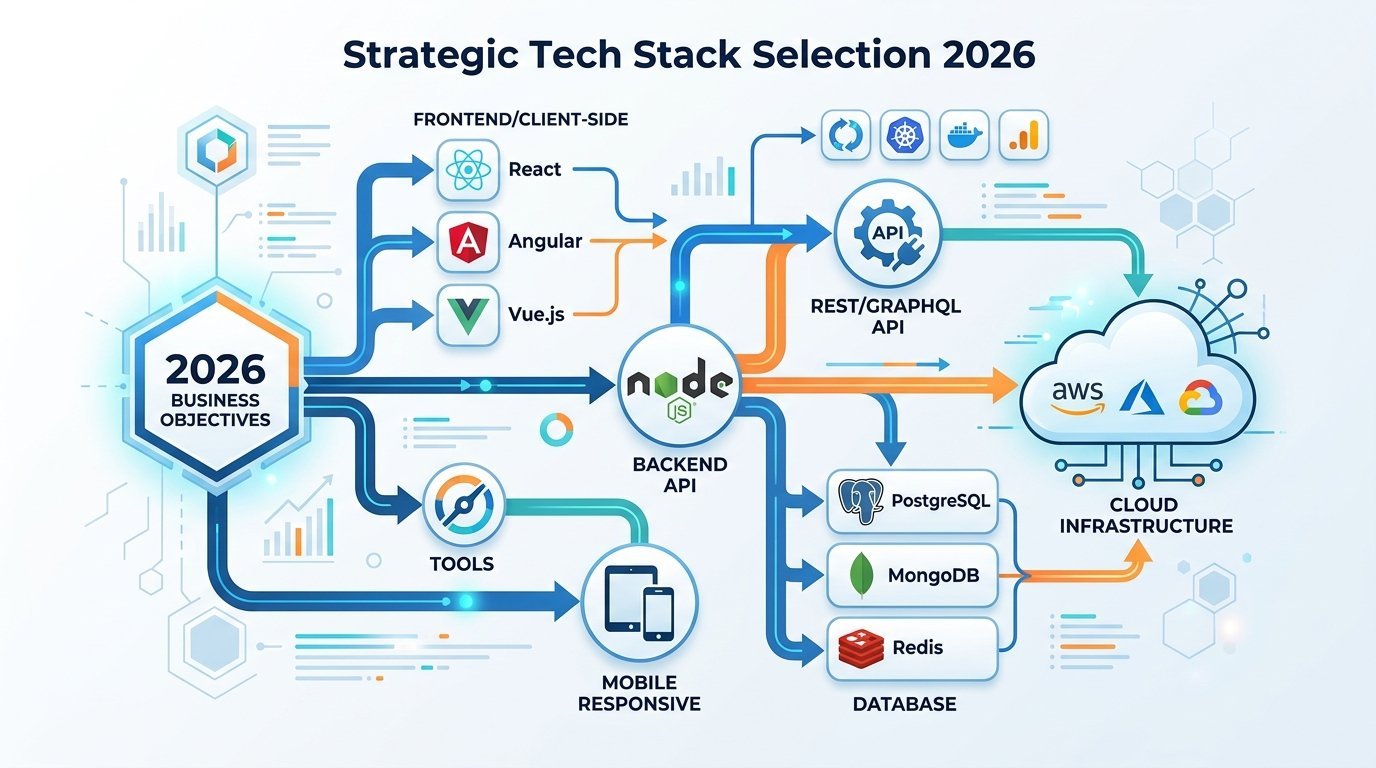
Technical Architecture for a Scalable Online Store
The technology choices made when building an e-commerce website determine not just how it performs today, but how well it can scale as the business grows.
| Technical Area | What to Prioritize | Why It Matters |
|---|---|---|
| Hosting Infrastructure | Cloud-based scalable hosting | Handles traffic spikes without downtime |
| Database Design | Optimized queries, proper indexing | Fast product and order data retrieval |
| CDN Integration | Content delivery network for static assets | Faster page loads across geographic regions |
| Security | HTTPS, PCI compliance, data encryption | Protects customer payment and personal data |
| API Architecture | Modular integrations for payment, shipping, marketing | Flexibility to add services without rebuilding |
| Caching Strategy | Server-side and browser caching | Reduces server load and improves speed |
Building on a solid technical foundation means the business can add new product categories, expand to new markets, or integrate new tools without requiring a complete platform rebuild every few years.
SEO for E-Commerce Websites: Getting Found by the Right Customers
An e-commerce website that search engines cannot discover or understand will struggle to attract organic traffic regardless of how well-designed it is. E-commerce SEO in 2026 requires attention to several specific considerations that differ from standard website optimization.
- Product page optimization with unique descriptions and targeted keywords for each item
- Category page SEO that captures broad shopping intent queries
- Structured data markup for products, enabling rich search results with ratings and prices
- Optimized image file names and alt text for every product photograph
- Canonical tags to manage duplicate content from product variants and sorting parameters
- Site architecture that distributes link authority effectively across product and category pages
- Fast Core Web Vitals scores, particularly Largest Contentful Paint and Cumulative Layout Shift
- Internal linking strategies that connect related products and categories
E-commerce SEO is ongoing work rather than a one-time setup. Regularly publishing buying guides, product comparison content, and category-specific articles builds topical authority that supports all product pages in ranking for competitive terms.
Strategies to Increase Repeat Purchases and Customer Lifetime Value
Email Marketing and Abandoned Cart Recovery
Not every visitor who adds a product to their cart completes the purchase. Automated abandoned cart email sequences that remind customers of what they left behind — and sometimes offer a small incentive to complete the order — recover a meaningful percentage of what would otherwise be lost revenue.
Beyond cart recovery, email marketing remains one of the highest-return channels for e-commerce businesses. Regular newsletters featuring new arrivals, personalized product recommendations, and exclusive subscriber offers keep the brand relevant between purchases.
Loyalty Programs and Rewards
Acquiring a new customer costs significantly more than retaining an existing one. Loyalty programs that reward repeat purchases with points, exclusive discounts, early access to sales, or free shipping benefits create strong incentives for customers to return rather than buying from a competitor next time.
Well-designed loyalty programs also generate referral behavior, as satisfied customers share their positive experiences and discount codes with friends and family — reducing customer acquisition costs while expanding reach organically.
Post-Purchase Experience
The customer relationship does not end at the checkout confirmation page. Order tracking updates, delivery notifications, post-delivery review requests, and personalized recommendations based on purchase history all extend the engagement beyond the transaction and lay the groundwork for the next one.
Common E-Commerce Website Mistakes That Cost Businesses Sales
Understanding what to avoid is as valuable as knowing what to implement. The following mistakes are responsible for a significant portion of lost e-commerce revenue across industries:
- Requiring account creation before allowing customers to checkout
- Displaying unexpected shipping costs only at the final checkout stage
- Using low-resolution or insufficient product images
- Neglecting mobile optimization, resulting in broken layouts on smartphones
- Offering an insufficient range of payment options
- Failing to display clear return and refund policies
- Missing search functionality or returning poor-quality search results
- Slow page loads caused by unoptimized images and heavy code
- No customer reviews or social proof on product pages
- Complex navigation that makes finding products unnecessarily difficult
Auditing an existing e-commerce website against this list often reveals straightforward improvements that can be implemented quickly and deliver measurable results within weeks.
Choosing the Right E-Commerce Platform for Your Business
The platform powering your online store determines what is possible, how much control you have, and what it costs to maintain and scale. Different platforms suit different business needs:
- Custom-built solutions: Maximum flexibility and control, ideal for businesses with unique requirements or large product catalogs requiring specialized functionality
- WooCommerce: Excellent for businesses already using WordPress, with vast plugin availability and complete ownership of data
- Shopify: Fast to set up with a streamlined interface, best suited to businesses that want ease of management over deep customization
- Magento / Adobe Commerce: Designed for enterprise-scale operations with complex catalog and multi-store requirements
- Laravel-based custom stores: Strong choice for businesses needing tightly integrated custom logic, unique pricing rules, or specific third-party system connections
The right choice depends on your product complexity, expected order volume, budget, and how much technical flexibility you need. Consulting with an experienced development team before committing to a platform prevents costly migrations down the road.
Conclusion
Building a successful e-commerce website in 2026 is not simply about putting products online and waiting for customers to find them. It requires thoughtful design that builds trust, technical architecture that performs reliably under real-world conditions, conversion-focused checkout flows, and ongoing strategies that keep customers engaged long after their first purchase.
The businesses that invest properly in their e-commerce presence — treating it as a strategic asset rather than a basic requirement — are the ones that consistently outperform competitors, achieve lower customer acquisition costs, and build the kind of loyal customer base that sustains long-term growth.
Whether you are launching a new online store from scratch, migrating away from a platform that no longer serves your needs, or improving an existing website that is not converting as well as it should, the approach matters as much as the tools you use. Starting with a clear understanding of your customers, your products, and your growth goals creates the foundation from which every other decision follows.
The opportunity in e-commerce has never been greater — and neither has the gap between businesses that approach it seriously and those that treat it as an afterthought.
Frequently Asked Questions (FAQs)
1. How much does it cost to build an e-commerce website in India?
The cost of e-commerce website development in India varies based on platform choice, number of products, required features, and design complexity. A professional custom e-commerce website typically ranges from a small boutique project to a full enterprise platform, with ongoing maintenance costs for updates and support.
2. How long does it take to build an e-commerce website?
A well-structured e-commerce website with core features typically takes eight to sixteen weeks from initial planning through development and testing to launch. More complex projects with custom integrations, large product catalogs, or advanced personalization features may require additional time.
3. What payment gateways work best for Indian e-commerce businesses?
For businesses selling primarily to Indian customers, Razorpay, PayU, and CCAvenue are among the most widely used gateways, offering support for UPI, net banking, credit and debit cards, and popular wallets. The right choice depends on transaction volume, fee structure, and the specific payment methods your customers prefer.
4. Do I need a mobile app in addition to an e-commerce website?
Not necessarily at launch. A well-optimized mobile-responsive e-commerce website serves most businesses effectively in the early stages. As customer volume grows and repeat purchase frequency increases, a dedicated mobile app becomes worth evaluating — particularly for building loyalty, enabling push notification marketing, and improving checkout speed for returning customers.
5. How do I drive traffic to my new e-commerce website?
Effective e-commerce traffic strategies combine organic search optimization, paid advertising on Google and social platforms, social media marketing, email campaigns to build and retain an audience, and influencer or affiliate partnerships. Starting with SEO and a targeted paid campaign simultaneously typically delivers the fastest results while building a longer-term organic foundation.
6. What e-commerce services does DkTechnoLab offer?
DkTechnoLab provides end-to-end e-commerce website development services including custom store design, platform selection and setup, payment gateway integration, inventory and order management systems, mobile-responsive development, SEO optimization, and post-launch maintenance and support. Our team works with businesses across industries to build online stores that are built to convert and designed to scale.

Written by the DkTechnoLab Team
Our Surat-based team of developers, designers and marketers has delivered 1250+ projects for 900+ clients since 2015. We write practical guides to help businesses make smarter technology decisions.
About us