Picture two businesses offering identical services at nearly identical prices. One has a website that loads quickly, guides visitors naturally toward the right information, and makes booking or purchasing effortless. The other has a cluttered layout, confusing navigation, and a checkout process that frustrates users into abandoning the site. Which business wins more customers? The answer is obvious — and it all comes down to design.
In 2026, user interface (UI) and user experience (UX) design have moved from being optional enhancements to fundamental drivers of business performance. Whether you run an e-commerce store, a service agency, a healthcare practice, or a SaaS platform, the way your website looks and feels directly determines whether visitors stay, engage, and convert into paying customers.
This article explores why UI/UX design is the most undervalued investment most businesses make, what separates great design from average design, and how prioritizing design in 2026 gives your business a measurable competitive edge.
Understanding UI and UX: Two Sides of the Same Coin
Although UI and UX are often mentioned together, they refer to distinct but deeply connected disciplines.
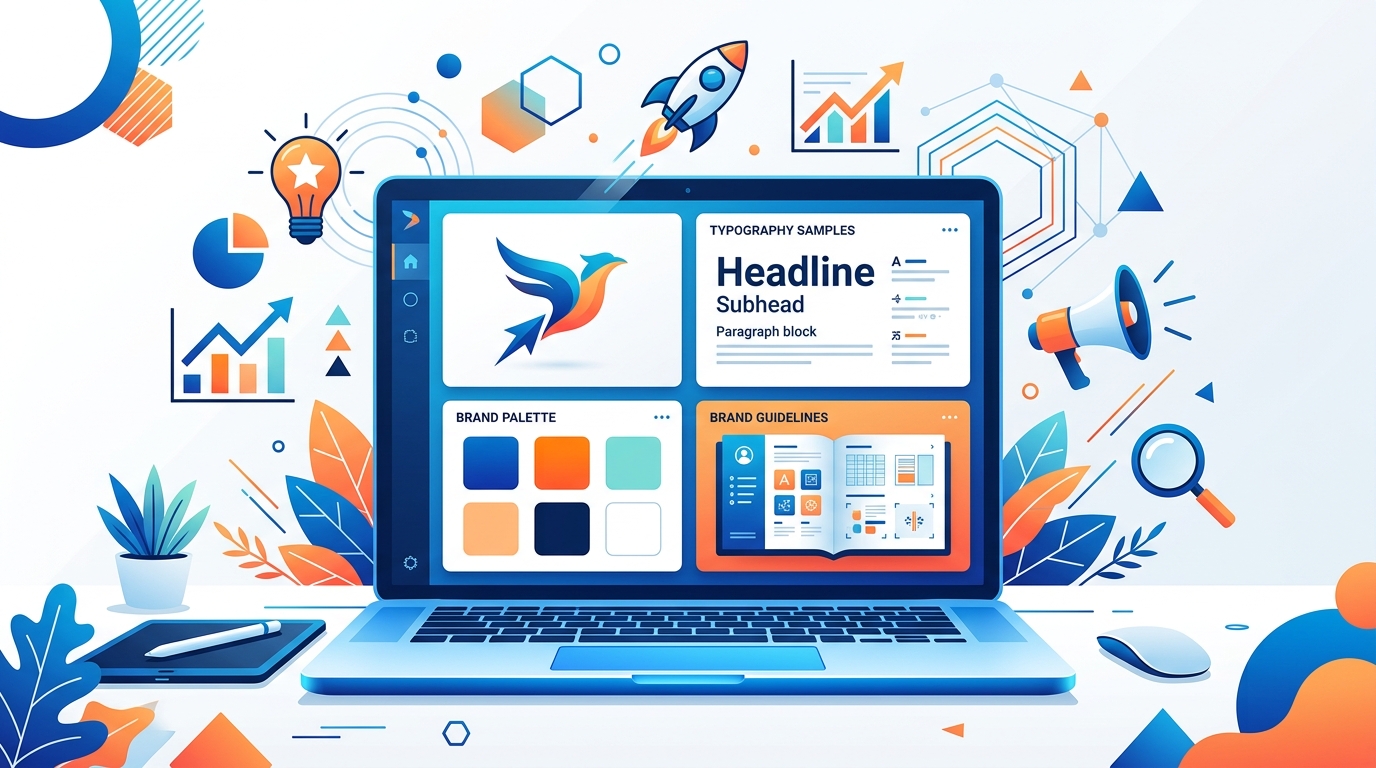
User Interface (UI) Design focuses on the visual elements of a product — the layout, colors, typography, buttons, icons, and every graphical component a user sees and interacts with. Think of UI as the appearance and style of your website.
User Experience (UX) Design addresses how a person feels when navigating your website or application. It covers information architecture, the logical flow between pages, how quickly someone can complete a task, and how satisfied they feel after the interaction. UX is the underlying structure that makes UI intuitive.
A website can have beautiful visuals but terrible UX — where users struggle to find what they need. Equally, a well-structured site with poor UI can feel outdated and untrustworthy. The strongest business websites marry both disciplines seamlessly, creating experiences that are both visually compelling and effortlessly functional.
The Business Case for Investing in UI/UX Design
1. First Impressions Form Within Milliseconds
Users form an opinion about a website within the first 50 milliseconds of landing on it. That initial impression — based entirely on visual design — determines whether they stay to explore or immediately leave for a competitor.
A professionally designed website signals credibility, expertise, and attention to detail. It reassures visitors that the business behind it takes quality seriously. An outdated or cluttered design, on the other hand, triggers distrust — regardless of how excellent the actual product or service might be.
2. Higher Conversion Rates
Every element on your website — the placement of a call-to-action button, the color used for a pricing plan, the number of fields in a contact form — directly influences whether a visitor takes the desired action.
Thoughtful UX design removes friction from the conversion journey. When users can find what they need without confusion, when the path from discovery to purchase is clear and logical, conversion rates improve significantly. Well-optimized UX design has been shown to increase conversion rates by 200 to 400 percent compared to poorly designed alternatives.
3. Reduced Bounce Rates
Bounce rate — the percentage of visitors who leave a website after viewing only one page — is one of the most telling indicators of design quality. If visitors consistently leave quickly, the experience failed to meet their expectations.
Effective UX design keeps visitors engaged by presenting relevant content clearly, guiding them deeper into the site, and making each interaction satisfying. Lower bounce rates also send positive signals to search engines, directly supporting your overall SEO performance.
4. Customer Trust and Brand Credibility
Trust is the currency of the digital economy. Users share sensitive information — names, addresses, payment details — only with websites they trust. UI/UX design plays a major role in building that trust through consistent visual branding, professional aesthetics, clear security indicators, and transparent communication.
A business that invests in high-quality design demonstrates that it values the people it serves. This perception of professionalism and care translates directly into stronger brand loyalty and higher customer lifetime value.
Core Principles of Effective UI/UX Design in 2026
Clarity Above All Else
The primary goal of any business website is to communicate clearly. Visitors should never have to guess what a business does, how to contact them, or where to click next. Clarity in design means using straightforward language, unambiguous navigation labels, and a visual hierarchy that naturally draws the eye toward the most important information.
Every page should answer three questions immediately: Where am I? What can I do here? What should I do next?
Mobile-First Design Philosophy
In 2026, more than 70 percent of global web traffic originates from mobile devices. Designing for mobile first is no longer a trend — it is the baseline expectation. A mobile-first approach means designing for the smallest screen first, then progressively enhancing the experience for larger screens.
Mobile-first websites load faster, rank better on search engines, and provide a superior experience for the majority of visitors who access the internet through their phones.
Consistent Visual Language
Visual consistency across all pages and touchpoints builds a coherent brand identity. This means using the same typography system, color palette, button styles, icon set, and spacing rhythm throughout the entire website.
Inconsistency — different button sizes on different pages, varying font weights, mismatched color usage — creates a disjointed experience that subconsciously signals lack of professionalism. A consistent visual language builds trust and makes navigation feel familiar and predictable.
Performance as a Design Element
Design is not only about how something looks — it is also about how quickly it works. Page speed is one of the most critical factors in user experience. Research from Google indicates that 53 percent of mobile users abandon a site that takes more than three seconds to load.
Great UI/UX design in 2026 incorporates performance optimization from the start: compressed images, efficient CSS, deferred loading for non-critical elements, and streamlined code. Speed is, itself, a design decision.
Accessibility and Inclusive Design
Accessibility means designing websites that can be used by people with varying abilities — including those with visual impairments, motor difficulties, or cognitive differences. Accessible design is not a restriction; it is an expansion that makes your website usable for a wider audience while improving overall usability for everyone.
Key accessibility practices include sufficient color contrast, keyboard-navigable interfaces, descriptive alternative text for images, and clearly labeled form fields.
Common UI/UX Mistakes That Cost Businesses Customers
Understanding what great design avoids is just as important as knowing what it achieves. The following are among the most common design mistakes that drive potential customers away:
- Overloaded homepages with too much information competing for attention
- Navigation menus that are difficult to find or understand
- Call-to-action buttons that are too small, poorly placed, or not visually distinct
- Forms that ask for excessive information before offering any value
- Slow-loading hero images or unoptimized videos above the fold
- Inconsistent visual styles across different pages of the site
- Lack of mobile responsiveness leading to broken layouts on smartphones
- Poor color contrast making text difficult to read
- Missing or unclear error messages during checkout or form submission
- No visual feedback confirming that a user has completed an action
Addressing these issues alone can produce a significant improvement in engagement, user satisfaction, and ultimately, business revenue — often without any increase in traffic or advertising spend.
The ROI of Good Design: What the Numbers Reveal
Skeptics sometimes view design as a purely aesthetic investment with soft returns. The data consistently tells a different story.
| Design Investment Area | Measured Business Impact |
|---|---|
| Improved page load speed | Up to 32% higher bounce rate without optimization |
| Clear, prominent call-to-action buttons | Conversion rate improvements of 30–90% |
| Simplified checkout process | Cart abandonment reduced by up to 35% |
| Mobile-responsive design | Organic traffic increase of 40–60% from mobile users |
| Accessible color contrast and typography | Broader audience reach and improved SEO signals |
| Consistent visual branding | Stronger brand recognition and customer trust scores |
The pattern is consistent across industries: investing in quality UI/UX design directly improves measurable business outcomes. Design is not a cost — it is a multiplier for every other marketing and product investment a business makes.
How UI/UX Design Supports Your SEO Strategy
Search engine optimization and user experience design are increasingly intertwined. Google's ranking algorithms in 2026 heavily weight Core Web Vitals — measurable indicators of loading performance, visual stability, and interactivity — all of which are direct products of design decisions.
A well-designed website that loads quickly, provides a smooth browsing experience, and keeps users engaged signals quality to search engines. Longer average session durations, lower bounce rates, and higher click-through rates — all outcomes of strong UX — send positive engagement signals that support organic rankings.
In practical terms, investing in UI/UX design is simultaneously an investment in your SEO strategy. The two disciplines reinforce each other, creating a compounding effect on your digital visibility over time.
The UI/UX Design Process: From Research to Launch
Professional UI/UX design follows a structured process that ensures every decision is grounded in user needs and business goals rather than personal aesthetic preferences.
- Discovery and research: Understanding the target audience, their goals, pain points, and digital behavior patterns
- Information architecture: Organizing content and navigation in a way that mirrors how users think and search
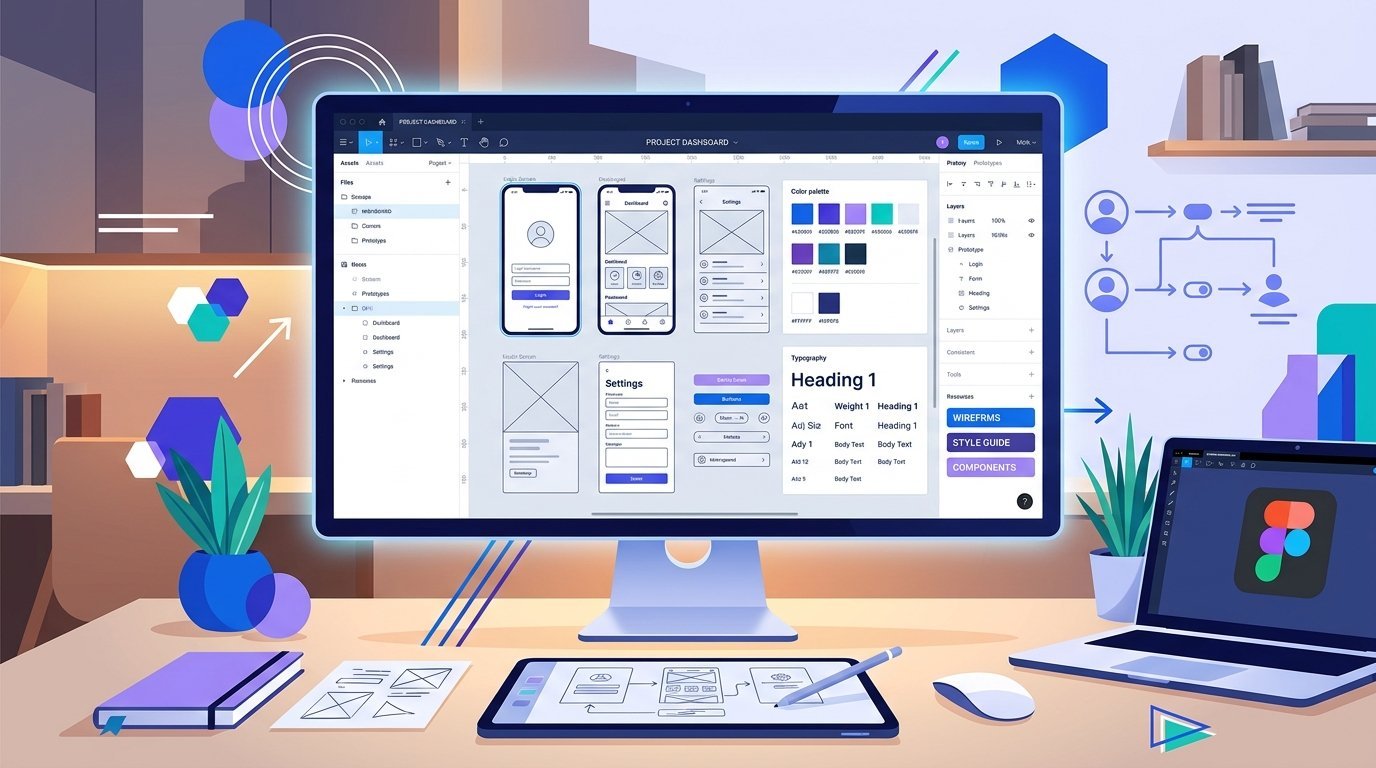
- Wireframing: Creating low-fidelity layout sketches to establish page structure before visual design begins
- UI design and prototyping: Developing the complete visual design and interactive prototype for stakeholder review
- Usability testing: Observing real users interacting with the prototype to identify friction and confusion points
- Development handoff: Providing developers with precise design specifications, assets, and interaction guidelines
- Post-launch iteration: Analyzing real user data and continuously refining the experience based on findings
This process ensures that the final design is not only visually polished but genuinely effective at serving both users and the specific business objectives behind the website.
When Should a Business Redesign Its Website?
Many businesses delay website redesigns unnecessarily — often until declining performance forces the decision. Proactive redesign planning guided by clear performance indicators is a far more effective approach.
Consider investing in a UI/UX redesign when:
- Your website is more than two years old and does not reflect current design standards
- Bounce rates are consistently high despite strong inbound traffic
- Conversion rates are declining or significantly below industry benchmarks
- The site does not perform well or display correctly on mobile devices
- Your brand identity has evolved but the website has not kept pace
- User feedback consistently mentions confusion or difficulty finding information
- Competitors have clearly superior digital experiences that attract more customers
- The website scores poorly on Google's Core Web Vitals assessment
A well-planned redesign investment typically pays for itself quickly through improved conversion rates, lower customer acquisition costs, and stronger organic search performance.
Conclusion
In an era where customers compare, research, and make purchasing decisions almost entirely through digital channels, the quality of your website's design is the quality of your first impression, your sales pitch, and your customer service experience — all simultaneously.
UI/UX design is not about making a website look attractive. It is about making your business easy to understand, easy to trust, and easy to choose. It is about removing every unnecessary obstacle between a potential customer's first visit and their decision to work with you.
Businesses that recognize design as a strategic investment rather than a cosmetic upgrade are the ones building digital presences that consistently outperform competitors, retain more customers, and grow more sustainably over time.
Whether you are building a new website from the ground up or evaluating whether your current site is genuinely serving your customers and your goals, the quality of your UI/UX design will determine more about your digital success than almost any other single factor.
Frequently Asked Questions (FAQs)
1. What is the difference between UI design and UX design?
UI design focuses on the visual elements of a website — colors, typography, buttons, icons, and layout. UX design addresses how the overall experience feels for the user — the logical flow, ease of navigation, and satisfaction of completing tasks. Both disciplines work together to create effective and engaging digital products.
2. How does good UX design improve sales?
Good UX reduces friction throughout the customer journey, making it easier for visitors to find what they need and complete purchases or inquiries. This directly increases conversion rates, reduces cart abandonment, and improves overall customer satisfaction — all of which positively impact revenue.
3. Does UI/UX design affect my website's SEO ranking?
Yes, significantly. Google uses Core Web Vitals — which measure loading speed, interactivity, and visual stability — as ranking signals, all of which are directly influenced by design quality. Strong UX also improves engagement metrics like time-on-site and bounce rate, which further support better organic rankings.
4. How long does a professional UI/UX design project take?
Timeline varies based on project scope and complexity. A standard business website redesign typically takes four to ten weeks from discovery and research through to final design delivery. More complex platforms with multiple user roles or extensive custom features may require additional time for thorough testing and iteration.
5. How do I know if my current website has UX problems?
Key indicators of UX problems include high bounce rates, low conversion rates, frequent user complaints about difficulty finding information, poor performance on mobile devices, and high cart or form abandonment rates. Analytics tools and user feedback surveys can help pinpoint specific areas that need improvement.
6. What UI/UX design services does DkTechnoLab offer?
DkTechnoLab provides comprehensive UI/UX design services including website redesign, mobile app interface design, wireframing, prototyping, usability testing, and complete design-to-development handoff. Our design team works closely with each client to create digital experiences that are visually compelling, intuitive to use, and aligned with specific business objectives.

Written by the DkTechnoLab Team
Our Surat-based team of developers, designers and marketers has delivered 1250+ projects for 900+ clients since 2015. We write practical guides to help businesses make smarter technology decisions.
About us