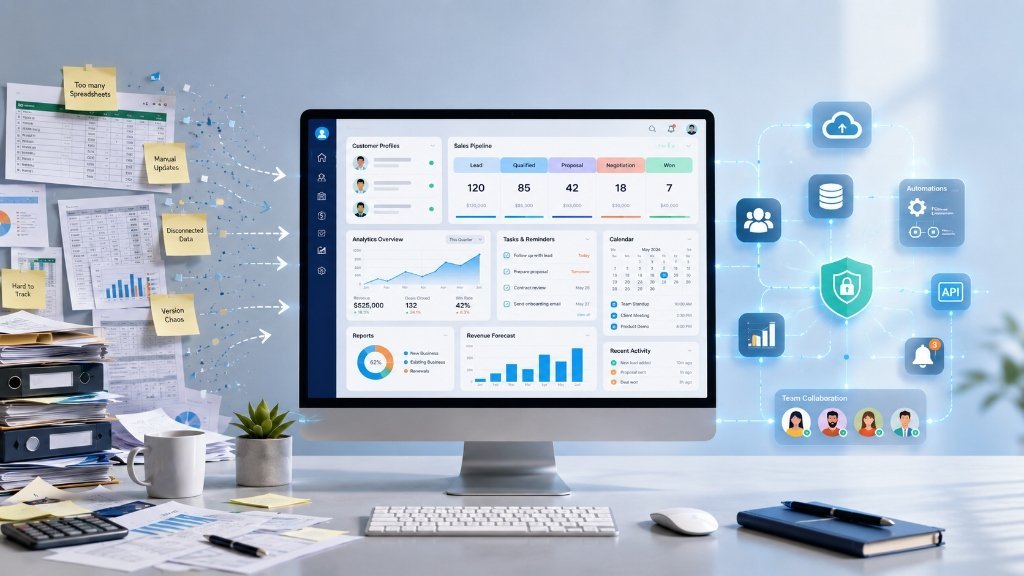
As businesses expand, managing customers, leads, sales, and daily operations becomes increasingly challenging. Many startups and small businesses begin their journey using spreadsheets because they are familiar, inexpensive, and easy to set up. While spreadsheets may work during the early stages, they quickly become difficult to manage as customer data grows and multiple team members need access to the same information.
In 2026, customer expectations are higher than ever. Businesses are expected to respond quickly, provide personalized experiences, and maintain accurate records across multiple communication channels. Relying on spreadsheets for customer management often leads to duplicate records, missed follow-ups, outdated information, and unnecessary manual work.
This is where a Custom Customer Relationship Management (CRM) solution becomes a game changer.
In this article, we'll explore why businesses should move beyond spreadsheets, the advantages of custom CRM software, and how investing in a tailored solution can improve productivity, customer satisfaction, and long-term growth.
What Is a Custom CRM?
A Customer Relationship Management (CRM) system is software designed to organize customer information, manage leads, monitor sales activities, and improve communication between businesses and their customers.
A custom CRM goes a step further by being built specifically for your company's workflows, industry, and operational requirements. Instead of adapting your business to fit pre-built software, the CRM is developed to match the way your team already works.
Custom CRM systems can include features such as:
- Lead management
- Sales pipeline tracking
- Customer communication history
- Quotation management
- Task and reminder automation
- Employee activity tracking
- Reporting dashboards
- Invoice integration
- Customer support management
- Role-based user permissions
Since every business operates differently, a customized CRM ensures that every feature contributes directly to improving business performance rather than overwhelming employees with unnecessary tools.
Why Spreadsheets Become a Problem as Businesses Grow
Spreadsheets remain one of the most commonly used business tools because they are simple and flexible. However, flexibility often comes at the cost of organization, security, and scalability.
1. Data Becomes Difficult to Manage
As customer information increases, spreadsheets become crowded with hundreds or even thousands of rows. Finding specific customer details, updating records, or maintaining consistency becomes increasingly difficult.
Employees often create multiple versions of the same spreadsheet, leading to conflicting information and confusion across departments.
2. Manual Data Entry Increases Errors
Every manual process introduces opportunities for mistakes. Incorrect phone numbers, duplicate customer records, missing email addresses, and accidental deletions can negatively impact customer relationships.
A custom CRM automates much of this work, reducing the risk of human error.
3. Poor Team Collaboration
Modern businesses rely on sales, marketing, customer support, and management teams working together. Spreadsheets rarely provide real-time collaboration features that maintain complete accuracy.
When multiple employees edit the same file simultaneously, mistakes and inconsistencies become common.
4. No Automation
Spreadsheets cannot automatically remind employees to follow up with leads, assign new tasks, send customer notifications, or update sales stages without significant manual effort.
As a result, valuable opportunities may be missed simply because someone forgot to update a spreadsheet.
Key Benefits of Switching to a Custom CRM
Centralized Customer Information
A custom CRM stores all customer-related information in one secure location. Instead of searching through multiple spreadsheets, emails, and notes, employees can instantly access complete customer profiles.
This typically includes:
- Contact details
- Purchase history
- Meeting notes
- Invoices
- Support tickets
- Sales status
- Documents
- Communication history
Having a single source of truth improves efficiency and eliminates confusion.
Better Sales Pipeline Management
One of the biggest advantages of a CRM is its ability to visualize the complete sales process.
Instead of maintaining separate spreadsheets for prospects, quotations, negotiations, and completed sales, every opportunity can be tracked inside one dashboard.
Sales managers can instantly see:
- New leads
- Qualified prospects
- Pending quotations
- Follow-up schedules
- Won deals
- Lost opportunities
This visibility allows businesses to forecast revenue more accurately and identify bottlenecks before they become major problems.
Improved Customer Experience
Customers appreciate businesses that remember previous conversations, respond quickly, and provide personalized service.
With a custom CRM, employees have immediate access to customer interactions, allowing them to respond confidently without asking customers to repeat information.
This creates a smoother customer journey and builds long-term trust.
Automation Saves Valuable Time
One of the biggest productivity improvements comes from automation.
Instead of manually updating spreadsheets every day, a CRM can automatically:
- Create follow-up reminders
- Assign tasks to employees
- Send email notifications
- Generate reports
- Track customer activities
- Update sales stages
- Schedule appointments
- Record communication logs
These automations allow employees to spend more time building relationships and closing deals instead of performing repetitive administrative work.
Enhanced Data Security
Business data is one of the most valuable assets any organization owns. Unfortunately, spreadsheets are often shared through email or stored on multiple devices, increasing security risks.
A custom CRM provides advanced security features such as:
- Role-based access control
- Encrypted databases
- Secure cloud backups
- Activity logs
- Multi-factor authentication
- Automatic backup scheduling
- Permission-based editing
This ensures sensitive customer information remains protected while allowing authorized employees to access the data they need.
Scalability for Future Growth
Business growth often brings new challenges, including expanding teams, increasing customer databases, additional service offerings, and more complex workflows. A spreadsheet-based system may work for dozens of customers, but it becomes increasingly inefficient when managing thousands of records.
A custom CRM is built with scalability in mind. New modules, integrations, user roles, and automation workflows can be added as your business evolves, ensuring the software continues to support your long-term goals without requiring a complete system replacement.
Custom CRM Integrates with Your Existing Business Tools
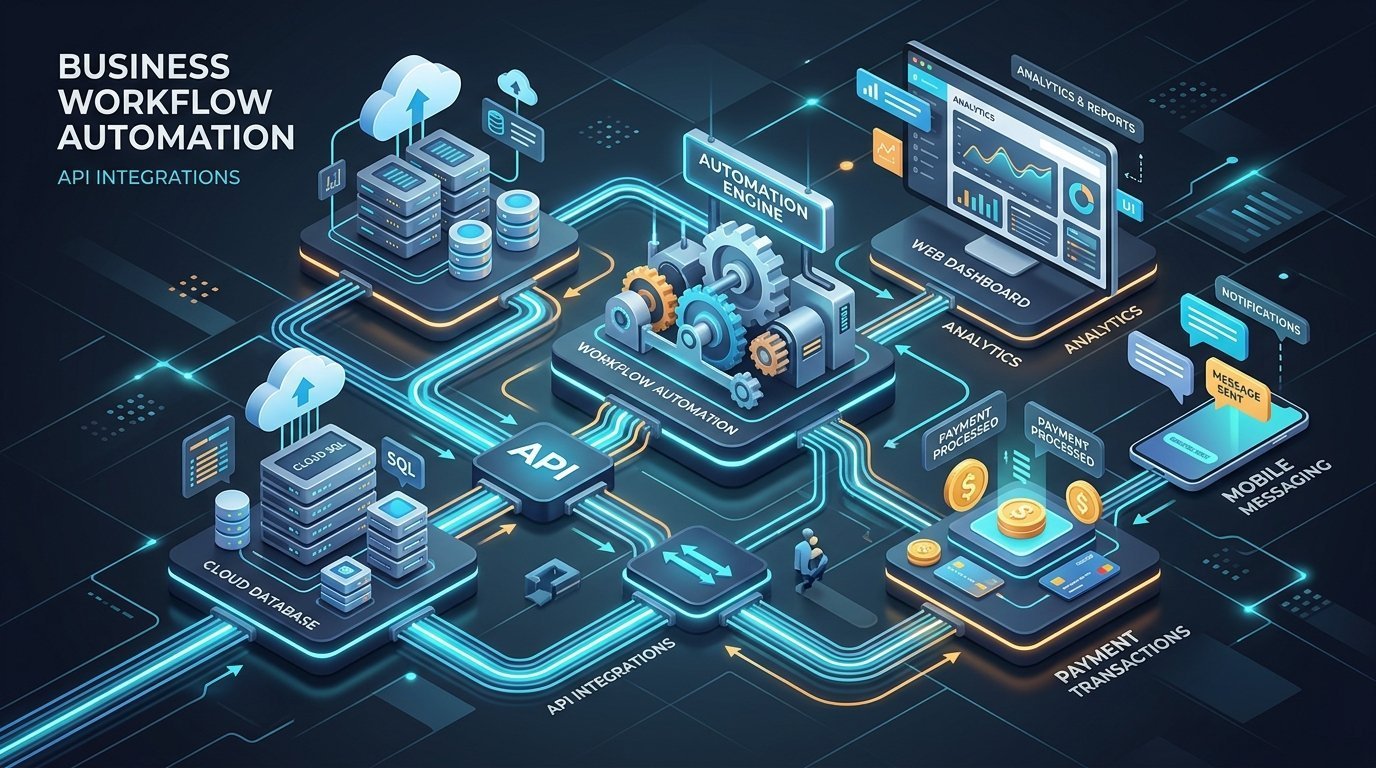
Modern businesses use multiple software solutions to manage different operations. These may include accounting software, email marketing platforms, payment gateways, inventory management systems, HR software, ERP solutions, and customer support tools.
A major advantage of a custom CRM is its ability to integrate seamlessly with the tools your business already relies on. Instead of switching between multiple applications, employees can access essential information from a centralized dashboard.
Common CRM integrations include:
- Email platforms for automated communication
- Accounting and invoicing software
- Payment gateways
- Inventory management systems
- Customer support ticketing systems
- Marketing automation platforms
- SMS and WhatsApp communication tools
- Business intelligence dashboards
These integrations reduce duplicate work, eliminate manual data transfers, and improve overall operational efficiency.
Custom CRM vs. Ready-Made CRM
Many businesses consider purchasing an off-the-shelf CRM before exploring custom development. While ready-made CRMs can work for some organizations, they often include unnecessary features while lacking the functionality specific businesses actually need.
| Feature | Ready-Made CRM | Custom CRM |
|---|---|---|
| Designed for Your Workflow | No | Yes |
| Flexible Customization | Limited | Unlimited |
| Third-Party Integrations | Restricted | Fully Customized |
| Scalability | Depends on Vendor | Built Around Business Growth |
| Feature Control | Vendor Controlled | Business Controlled |
| Long-Term Flexibility | Limited | Excellent |
A custom CRM gives businesses complete ownership over their software, making it easier to adapt as market demands and internal processes evolve.
Signs Your Business Has Outgrown Spreadsheets
If your organization experiences any of the following challenges, it may be time to invest in a custom CRM:
- Customer information is stored across multiple spreadsheets.
- Sales representatives miss follow-up opportunities.
- Duplicate customer records are becoming common.
- Employees spend excessive time updating spreadsheets manually.
- Management struggles to generate accurate business reports.
- Customer service teams cannot quickly access customer history.
- Departments work with different versions of the same data.
- Business growth is creating operational bottlenecks.
Recognizing these signs early allows businesses to implement better systems before inefficiencies begin affecting customer satisfaction and revenue.
How a Custom CRM Improves Decision-Making
Business decisions are only as good as the data behind them. A custom CRM provides real-time dashboards, performance metrics, and detailed reports that help business owners understand what's happening across sales, customer support, and operations.
Instead of manually collecting information from different spreadsheets, managers can monitor key performance indicators such as lead conversion rates, sales performance, customer retention, and employee productivity from one place.
Access to reliable, real-time insights allows organizations to identify trends, solve problems quickly, and make strategic decisions with greater confidence.
Why Businesses Are Choosing Custom CRM Development in 2026
Digital transformation continues to reshape industries across the globe. Customers expect faster responses, personalized communication, and seamless service experiences regardless of business size.
To meet these expectations, companies require software that aligns with their unique workflows rather than forcing employees to adapt to generic systems.
Custom CRM development provides that flexibility. Businesses can introduce automation, improve collaboration, strengthen data security, and integrate multiple processes into one centralized platform. As technology evolves, the CRM can also evolve alongside the business, making it a future-ready investment.
Conclusion
Spreadsheets have served businesses well for decades, but they were never designed to manage the growing complexity of modern customer relationships. As organizations expand, manual processes become inefficient, errors increase, and collaboration becomes more difficult.
A custom CRM offers a smarter approach by centralizing customer information, automating repetitive tasks, improving communication, enhancing security, and supporting long-term scalability. Rather than adapting your business to fit generic software, a custom CRM is built specifically around your operational needs.
Whether you're a startup preparing for growth or an established company looking to improve efficiency, investing in a custom CRM can help your business deliver better customer experiences while increasing productivity across every department.
Choosing the right technology today can create a stronger foundation for tomorrow's growth, allowing your team to focus on building lasting customer relationships instead of managing spreadsheets.
Frequently Asked Questions (FAQs)
1. What is a custom CRM?
A custom CRM is customer relationship management software designed specifically for a business's unique workflows, processes, and operational requirements instead of using a one-size-fits-all solution.
2. Why are spreadsheets not suitable for growing businesses?
As businesses grow, spreadsheets become difficult to manage due to manual updates, duplicate records, limited collaboration, higher error rates, and the lack of automation.
3. What are the biggest benefits of a custom CRM?
Some major advantages include centralized customer data, workflow automation, improved collaboration, stronger security, real-time reporting, scalability, and seamless integration with existing business tools.
4. Can a custom CRM integrate with other software?
Yes. A custom CRM can integrate with accounting software, payment gateways, ERP systems, inventory management, email marketing platforms, customer support tools, and many other business applications.
5. Is a custom CRM suitable for small businesses?
Absolutely. Small businesses can benefit from a custom CRM by improving organization, reducing manual work, managing customer relationships more effectively, and preparing for future growth without changing systems later.
6. How does a custom CRM improve customer service?
It gives employees instant access to customer history, previous conversations, purchase records, and support requests, enabling faster and more personalized service.
7. Is investing in a custom CRM worth it in 2026?
Yes. As businesses become increasingly digital, a custom CRM helps improve efficiency, streamline operations, enhance customer experiences, and provide long-term flexibility, making it a valuable investment for sustainable growth.
Written by the DkTechnoLab Team
Our Surat-based team of developers, designers and marketers has delivered 1250+ projects for 900+ clients since 2015. We write practical guides to help businesses make smarter technology decisions.
About us